

-
 Only a few left!
 -
 Sold outSold out
 -
 Sold outSold out
 -
 Sold outSold out
 -
 Sold outSold out
 -
 Sold outSold out
 -
 Sold outSold out
 -
 Sold outSold out
 -
 Only a few left!
 -
 Sold outSold out




Varieties Worth Planting
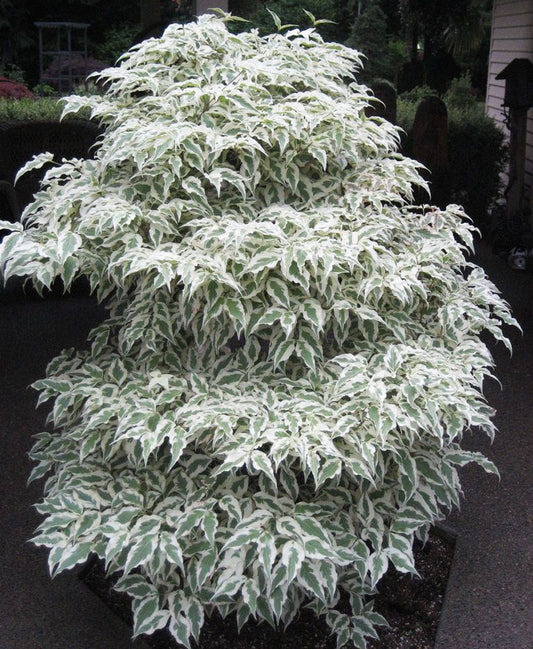
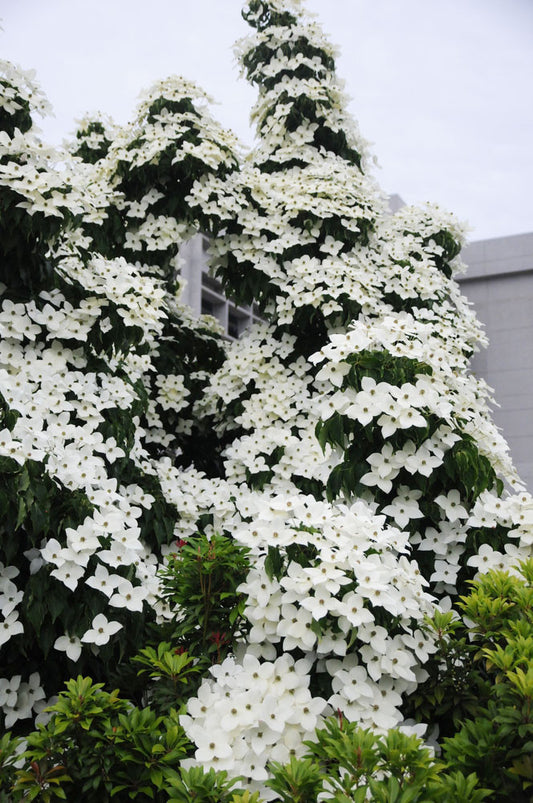
Our collection celebrates the many faces of the dogwood. The kousa dogwood, native to Korea and Japan, opens its star-shaped flowers a little later than the native flowering dogwood of the eastern United States, drawing the spotlight into early summer. Look to 'Scarlet Fire' for luscious dark-pink blooms that hold for up to eight weeks, or 'Summer Fun' for variegated foliage edged in white. For something rare, the evergreen Porlock and Himalayan dogwood (Cornus capitata) carry leathery green leaves year-round with creamy bracts in summer, while the layered pagoda dogwood makes a graceful understory tree for woodland corners. Each is an ornamental tree with real personality. Pick the one that calls to you and we will pack it with care so it arrives ready to root in. A dogwood planted this season becomes the tree your yard returns to year after year, and there is no better moment to begin that story.
Left: Cornus Kousa ‘Satomi’

Growing a Flowering Dogwood Successfully
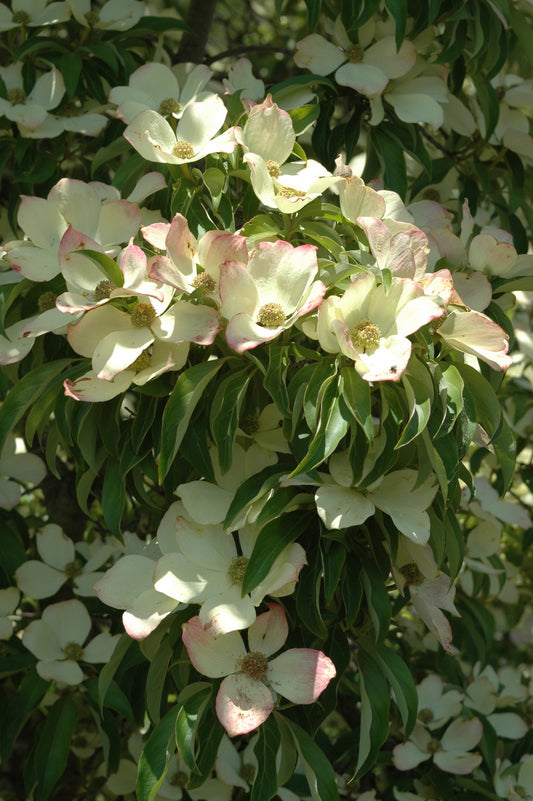
Picture the corner of your yard where the morning light filters through. That is where your dogwood wants to live. These trees evolved as understory beauties beneath taller forest canopies. They thrive in partial shade with gentle morning sun and a little afternoon shade through the hottest hours. If you garden in a cooler coastal climate, full sun works and rewards you with the richest fall color the neighborhood has seen. Give your flowering dogwood tree a home in well-drained soil that leans toward the acidic side. Choose a spot with consistent moisture, especially through dry periods in the first few years while the roots stretch out. Ideal conditions are simple: moist soil, a little shelter from harsh wind, and room overhead for the canopy to open. A bit of proper care in early spring, meaning a light feeding and a quick look for leaf spot or powdery mildew, is really all it takes. The reward is a tree that grows alongside you for decades, offering quiet seasonal beauty and the kind of slow, steady presence that makes a yard feel like home.
Right: Scarlet Fire Dogwood


About Singing Tree Gardens Nursery
At Singing Tree Gardens Nursery, we have spent decades sharing exceptional plants with gardeners across the United States. Tucked along Dow's Prairie near McKinleyville, California, our garden center grows a wide range of trees, shrubs, unusual perennials, and ornamental grasses chosen for character, resilience, and beauty. Our team blends years of hands-on horticultural experience with a real love for sharing what we know, and we are always glad to help you choose a flowering tree that suits your soil, your light, and the size of your yard. Every dogwood we send out has been raised with care and is ready to find a home in your garden. Browse the trees above, or contact us with any questions about which variety fits your space.

FAQs
What is the best place to plant a flowering dogwood?
Most flowering dogwood trees prefer partial shade with morning sun and a touch of afternoon shade, planted in acidic soil that drains well. In cooler coastal areas, full sun also brings a strong spring bloom and brilliant fall color.
How big does a dogwood tree get?
Mature size depends on the variety. Many dogwood varieties reach 15 to 25 feet tall and wide, which makes them a wonderful small tree for smaller yards or a beautiful specimen tree in a larger landscape, and several smaller selections also work well as specimen trees near a patio.
When do dogwoods bloom?
The native flowering dogwood opens its spring bloom in early spring before the leaves emerge, while kousa dogwood types arrive a little later with white or pink flowers that linger for weeks. Both follow with bright red fruit in early fall that birds enjoy.
Are dogwoods low maintenance?
Yes. With well-drained soil, consistent moisture during dry periods, and a partly shaded location, a dogwood is wonderfully low maintenance and asks for very little once established.
Do dogwoods attract wildlife?
Very much so. Red fruits draw songbirds through early fall, and the flower of the white dogwood tree serves as a host plant for pollinators, including the spring azure butterfly.
What hardiness zone do dogwoods grow in?
Most thrive in hardiness zone 5 through 9, though species like Himalayan dogwood prefer milder winters for optimal growth.