

-
 Sold outSold out
 -
 Sold outSold out
 -
 Sold outSold out
 -
 Sold outSold out
 -
 Sold outSold out
 -
 Sold outSold out
 -
 Sold outSold out




Magnolia Varieties to Explore
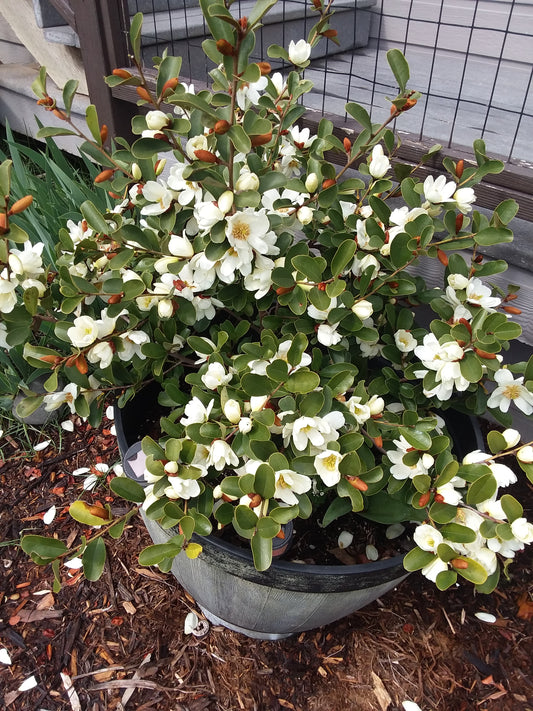
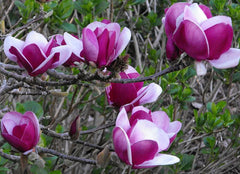
Walk through our magnolia collection and you'll see why this is one of the most loved families of flowering trees in the garden world. For that picture-perfect spring show, the saucer magnolia (M. soulangeana) opens huge pink and white goblets on bare wood before the leaves catch up. Magnolia denudata gives you creamy white, fragrant flowers in March with a heritage that traces back a thousand years in Chinese gardens. If yellow is your color, cultivars like 'Elizabeth' and 'Judy Zuk' carry butter and sunset tones well into late spring. Tight on space? 'First Love' stays narrow and tidy, perfect for smaller gardens and patios. And if you want blooms plus presence all year, consider our evergreen michelia hybrid 'Inspiration'. This evergreen tree has glossy leaves and deeply scented white cups whose fragrance can carry 100 feet on a still morning. Running through many of these crosses is Magnolia liliiflora parentage, which is where the rich pinks and purples come from that make the genus so hard to walk past.
Left: Yellow Bird

Growing Magnolia Trees at Home
The good news for anyone shopping for a magnolia: they're generous, forgiving trees. Give yours a spot with full sun to partial shade, morning light, and a little shelter from strong winds that can brown fresh petals, and you'll be rewarded with years of spring blooms you can see from the kitchen window. Soil requirements are friendly too.Magnolias love rich, acidic soil, with well-drained soil being the one non-negotiable. They'll even handle clay soils when amended with compost and planted on a gentle mound. Water young trees deeply through dry periods their first two summers while the roots settle in, then feed each spring with a slow release fertilizer made for acid-loving plants. Minimal pruning is needed, and any light trimming happens right after bloom so you don't sacrifice next year's flower buds. Once strong roots take hold, your magnolia becomes an ornamental tree that pays you back in fragrance, color, and backyard moments, equally at home in small yards or larger landscapes.
Right: Magnolia x Soulangeana



About Singing Tree Gardens Nursery
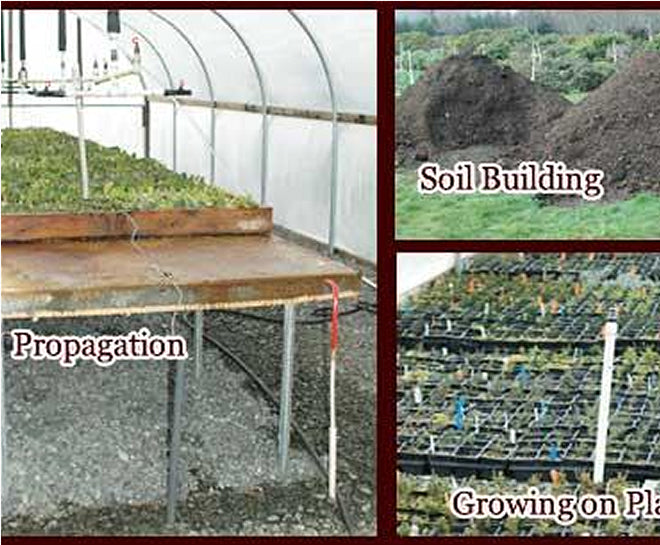
At Singing Tree Gardens Nursery, we've spent decades sharing the joy of gardening through plants with real personality. Tucked into the fog and forests of McKinleyville on California's North Coast, our arboretum-style nursery grows over 600 varieties of rare plants, with an extensive range of magnolias among our favorites. Our team hand-selects every magnolia tree we carry for fragrance, form, and real garden performance, not just catalog looks. Sustainability and curiosity guide our work, and we love helping fellow gardeners find the magnolia that will anchor their yard for generations.
FAQs
Do magnolia trees prefer full sun or partial shade?
Most magnolia varieties grow best in full sun to partial shade, with at least four to six hours of direct light each day. A little afternoon shade is welcome in hotter inland gardens, while coastal yards can give magnolias the full day of sun without trouble.
What kind of soil does a magnolia tree need?
Magnolia trees thrive in acidic soil with plenty of organic matter, and well-drained soil is a must. They will grow in clay soils if the site is amended with compost and planted on a slight mound so the crown does not sit in standing water.
What kind of soil do rhododendrons need?
They thrive in acidic soil that’s rich in organic matter and drains well. Avoid soggy areas to prevent root rot.
When do magnolias bloom?
It depends on the variety. Deciduous magnolia types like the saucer magnolia open their magnolia flowers on bare branches in early spring, usually March here on the North Coast. Later bloomers such as 'Sunsation' push into late spring, helping them dodge frost. Our evergreen 'Inspiration' can push fragrant blooms from spring into late summer in warm years.
What's the difference between evergreen and deciduous magnolias?
A deciduous tree drops its leaves each fall and flowers on bare wood before foliage returns, giving you that pure, sculptural bloom everyone pictures. Evergreen types keep their glossy leaves through winter and flower during warmer months. Deciduous varieties offer springtime drama, while evergreen varieties provide year-round interest and screening.
How tall does a magnolia tree grow?
Mature height varies widely by cultivar. Smaller varieties like 'Tinker Belle' top out around 10 to 12 feet, which makes them an excellent choice for patios and small yards. Larger selections like 'Galaxy' can reach 30 to 40 feet over time. Most are moderate growers, so you can expect blooms on young trees within a few years of planting.
Are magnolia trees hard to care for?
Not at all. Once established with strong roots, magnolias handle dry periods well, ask for minimal pruning, and reward you with generous bloom. Feeding each spring with a slow release fertilizer for acid-loving plants keeps them thriving.