



Find the Rhododendron That Fits Your Yard
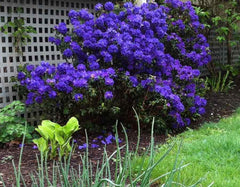
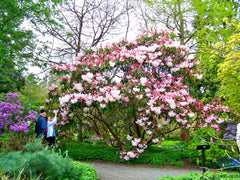
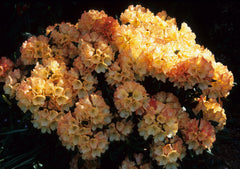
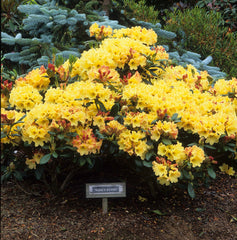
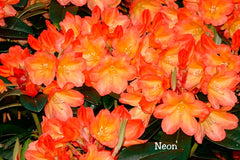
Size is the first thing to settle. A compact variety like Blue Baron stays low enough for foundation plantings and tight beds, while Loderi King George grows into a large evergreen shrub with enough presence to anchor a corner. Anah Kruschke takes full sun better than most and makes a dense privacy screen planted in a row. Nancy Evans carries warm yellow showy flowers, and Neon leans bright pink. Sort by height, bloom month, or color to narrow the wide range down to the rhododendron shrub that suits your space. A mass planting of one variety reads calm, and mixing two or three gives you blooms in early spring and again in late spring.

Growing Rhododendrons in Your Backyard
The good news is that a rhododendron asks for very little once you get the planting right. Because the roots sit close to the surface, set the root ball slightly high in well-drained soil with organic matter mixed in, then mulch to keep those roots cool through dry spells. Like all acid-loving plants, rhododendrons want acidic soil, and a raised bed of ericaceous compost solves a yard that runs to alkaline soil. Morning sun with afternoon shade gives you the richest color, though partial shade under small trees turns a plain corner into a woodland garden. Water weekly the first season, then feed in early spring and again in early summer for fat flower buds. After that, you have a low-maintenance shrub with winter interest and a show waiting every April.
About Singing Tree Gardens Nursery
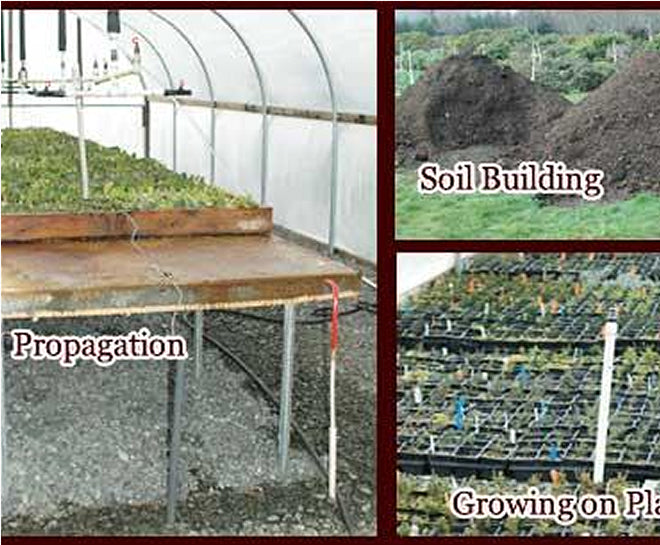
Singing Tree Gardens Nursery started in 1992 as a small specialty nursery for rhododendrons, and rhododendrons are still what we know best. We grow on ten acres at Dow's Prairie near McKinleyville, California, where half the property is a display garden planted with mature examples of what we sell. Every plant is propagated by hand, potted in soil mixes we compost ourselves, and watered from a deep well on the property. Peak bloom here is April and May, and the nursery is open Tuesday through Saturday if you are close enough to visit. Shopping from home works too, since we ship nationwide. Contact us with questions.
FAQs
Where do rhododendrons grow naturally in the United States?
The pacific rhododendron grows wild through the coastal forests of Northern California, Oregon, and Washington, and other native rhododendrons grow across the Appalachians. Most of what we sell are garden hybrids and species, though the western azalea is a native plant we propagate and ship.
What is the difference between a rhododendron and an azalea?
Azaleas belong to the rhododendron family and share the same genus. Azaleas tend to stay smaller with finer leaves and more blooms per stem, and a deciduous azalea drops its leaves in fall while most rhododendrons keep theirs all year.
When do rhododendron blooms open?
April and May are peak months in most gardens. A few varieties start as early as February and others carry into June, so two or three bloom times spread rhododendron blooms across the season.
Can a rhododendron take full sun?
Some can. Thick-leaved varieties handle full sun in cool climates, but part shade keeps the rhododendron flower from fading in extreme heat. Hot southern zones call for afternoon shade and steady moisture.
Are rhododendrons useful on a slope?
Yes. Their shallow, fibrous roots knit the topsoil together, which makes them a sound choice for erosion control on banks and hillsides that are difficult to plant.
What colors do rhododendrons come in?
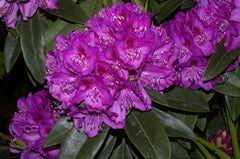
Pink flowers are the most common in our collection, followed by white, yellow, red, purple, and bi-colors. Several species carry small bell-shaped flowers in plum and rose, and the vibrant colors across the group make a rhododendron a perfect addition to almost any planting scheme.
Do rhododendrons ever go on sale?
Yes. Something new goes on sale every week.